Online Reporter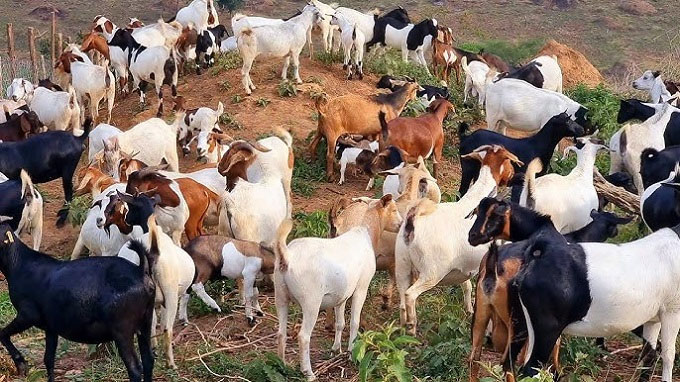
Lovemore Kadzura
Post Reporter
BOTH commercial and small scale farmers in Manicaland Province are increasingly turning to goat production, as small ruminant farming emerges as a key livelihood strategy, amid shifting climatic conditions and rising demand for meat and breeding stock.
Agricultural experts highlight that the shift towards goat rearing is driven by the animals’ resilience to drought, lower production costs, and faster reproduction rates compared to cattle, which remain vulnerable to recurring dry spells and disease outbreaks.
Recent figures from the Crops, Livestock and Fisheries Assessment underscore this trend.
Goat numbers in Zimbabwe rose from 4 883 669 in 2024 to 5 107 205 in 2025, reflecting a significant increase and cementing the growing importance of small ruminants in the agricultural economy.
Sheep production also recorded growth, rising by 2,8 percent from 746 277 in 2024 to 767 263 in 2025.
“The goat population increased from 4 883 669 in 2024 to 5 107 2025 in 2025, reflecting growth driven by a high kidding rate and improved rainfall conditions that enhanced feed availability and overall herd productivity. Manicaland had kidding rate of 95 percent followed by Mashonaland Central 93 percent.
“Goat offtake averages 23 percent nationally, with the highest levels in Mashonaland Central (28 percent) and Manicaland (27 percent). Most goats were sold through the open market (74 percent), followed by middlemen (21 percent) and abattoirs (four percent) with regulated channels playing a minimal role (one percent). This shows the informal market dominates goat trade. The estimated meat produced from slaughtered goats was 11 981 metric tonnes with an average carcass weight of 13,8kg,” noted the report.
Goat breeder and past chairperson of the Boer Goat Breeders Society of Zimbabwe, Mr Crispen Kadiramwando, said farmers have realised that small ruminants such as goats offer quick turnover, making the business highly viable. He noted that demand for goat meat is abundant, yet local farmers are still failing to meet it — creating space for more producers to enter the market.
“The main reason is economic. Small stock multiply very fast. Goats carry pregnancies for only a few months and often give birth to twins. Kids are weaned at four months, and within nine months a farmer can have a stand alone animal and two kids. That quick turnover has attracted many people because, in business, we all want something that returns faster.
“Transporting goats or sheep to market is also cheaper and easier compared to cattle. You can carry more than ten goats in a single bakkie, which is impossible with one cow. A cow takes nine months to give birth, and the cost of rearing cattle is very high. In the event of drought, small stock farmers can quickly adjust and minimise losses.
“People have realised that farming with small stock is economical, with high turnover and easier management. Goats require far less space — a small plot can sustain them, whereas one beast needs about four hectares per year.
‘‘For goat meat, no farmer can claim to fully satisfy demand. I have a client who requires a tonne per week, and I cannot meet it. The local market is wide open even before we talk about exports.
“I recommend farmers embrace breeds such as Boer, Kalahari Red, and Savanna. These carry bigger bodies, have good weight and growth rates, and help achieve quicker turnover,” said Mr Kadiramwando.
In districts such as Chipinge, Mutare, Makoni, and Buhera, communal farmers are increasingly integrating goats into mixed farming systems as a buffer against crop failures linked to erratic rainfall.
Agricultural specialists note that goats require less feed and water than cattle and thrive on natural shrubs and browse vegetation common in semi arid areas.
With climate variability continuing to reshape Zimbabwe’s agricultural landscape, small ruminants are becoming central to both survival and commercial farming strategies.
In Manicaland and other drought prone provinces, goats are no longer just supplementary livestock — they are emerging as a cornerstone of resilience, food security, and rural livelihoods.